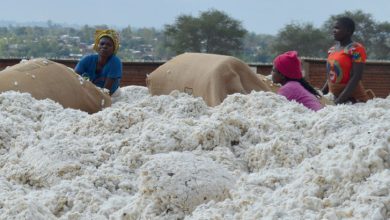
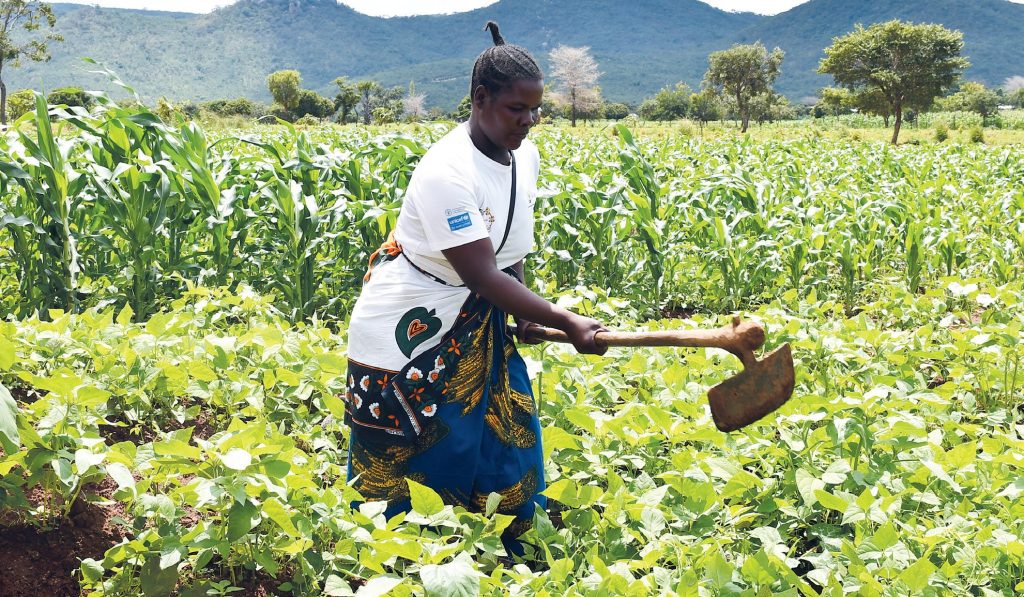
Rebecca Kayange, 41, of Udonda Village, Traditional Authority Kameme in Chitipa District, has found her steps from poverty to self-reliance with savings from the nationwide Social Cash Transfer Programme.
Kayange started receiving monthly cash transfers in December 2024.
She cashed out K90 000 monthly until April 2025, marking a turning point in her household income.
“I used K30 000 to pay fees for my 15-year-old child who learns at Kameme Community Day Secondary School, another K30 000 to buy a goat and the remainder as capital for a small business which earned me K66 000,” says the mother of four.
The woman who could not afford the barest of her needs now provides more than just basics for her household, comprising three girls and one boy.
The younger children go to nearby primary schools.
Beyond education, the social protection earnings have enhanced her household’s food security.
Kayange now grows maize, groundnuts and soya beans.
She has acquired a 1.5-acre land through proceeds of farming and business.
“I want to buy a motorcycle to improve my travel as I sell my goods at Chitipa Boma, about 30 kilometers away. So far, I have saved K300 000 from profits,” she says.
Kayange belongs to a village savings and loans group, which meets regularly to share financial literacy skills and business loans.
These skills have awakened her to the importance of saving and long-term investments for improved livelihoods, including food security, decent housing and resilience to disasters.
Kissa Simkoka, 39, of Ibuzya Village describes the safety net initiative as a lifeline to her family’s dignity.
The mother of four was selected for the initiative in 2024.
She runs a business that helped her harvest 11 bags of maize weighing 90 kilogrammes each.
Simkoka also yielded five bags of unshelled groundnuts.
“Having struggled with poverty for years, I challenged myself to work hard. Today, I have over three acres where I grow maize, beans, sunflower and groundnuts,” she says.
Simkoka has moved from a grass-thatched house to a brick house roofed with iron sheets.
“When we lived in a dilapidated house, my children were often bedridden and couldn’t perform well in school,” she recounts.
The newly constructed house, funded by the businesses supported by the initiative—has transformed their livelihoods, health and self-esteem.
“The children no longer worry about a leaky house that once affected their education, well-being and peace of mind, especially during the rainy season,” Simkoka states.
The social protection programme implemented by the Ministry of Gender, Children, Disability and Social Welfare, targets the poorest of the poor to end poverty, hunger, vulnerability and inequality.
It boosts recipients’ access to food, decent shelter, education and basic needs in line with Sustainable Development Goals.
The social cash transfers are part of the Malawi National Social Support Programme along with the Social Support for Resilient Livelihoods Project.
The social protection initiatives are supported by the World Bank, Unicef and other partners under the Social Protection Multi-Donor Trust Fund.
Senior Chief Mwabulambiya says the impact of the program is evident across communities.
“We have seen remarkable progress, particularly in school enrolment, improved livelihoods and socio-economic empowerment. In my area alone, over 27 learners have been selected to secondary school due to bylaws we introduced to promote quality education,” he says.
According to the National Statistical Office, Chitipa District has a population of over 250 000 under nine traditional authorities. According to District Social Welfare Officer Gladys Fachi Nthambala, about 28 000 people from 5 149 households in Chitipa have benefitted from social cash transfers.
Recently, the district disbursed over K600 million to ultra-poor households.
The Government of Germany, through its rural development bank, KfW, funds the social protection initiative in Chitipa.
Government reports disbursing about K105 billion to beneficiaries nationwide in the past fiscal year.
Social cash transfers benefit households with elderly persons, persons with chronic illnesses, people with disabilities, child-headed households and families with children under the age of two.